Your car’s story. All of it, in one place.
Every car has a story. Yours is scattered across a glovebox of receipts, a folder of photos, and memory. GarageHub keeps it in one timeline per vehicle — every service, note, and photo, from purchase to today.
Every car’s record, as the app keeps it
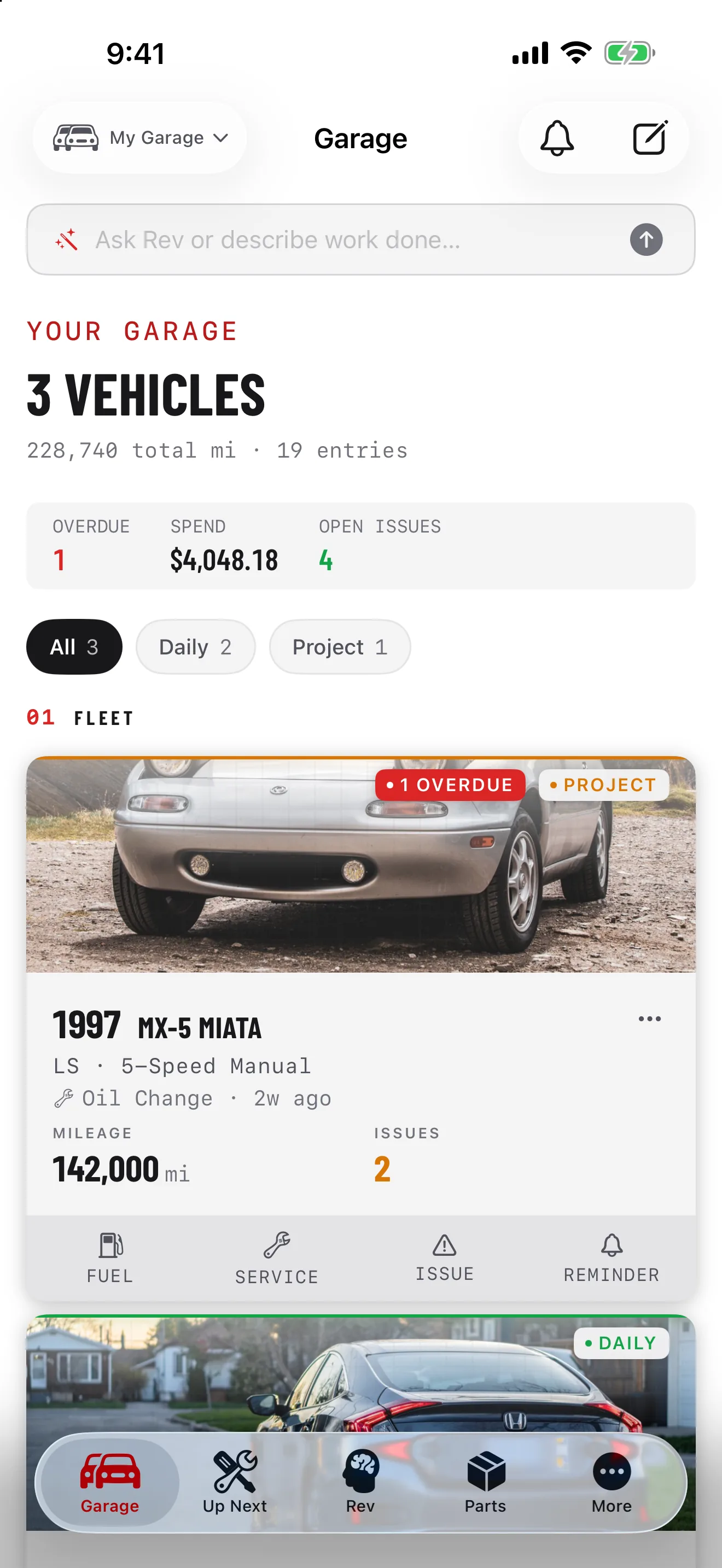
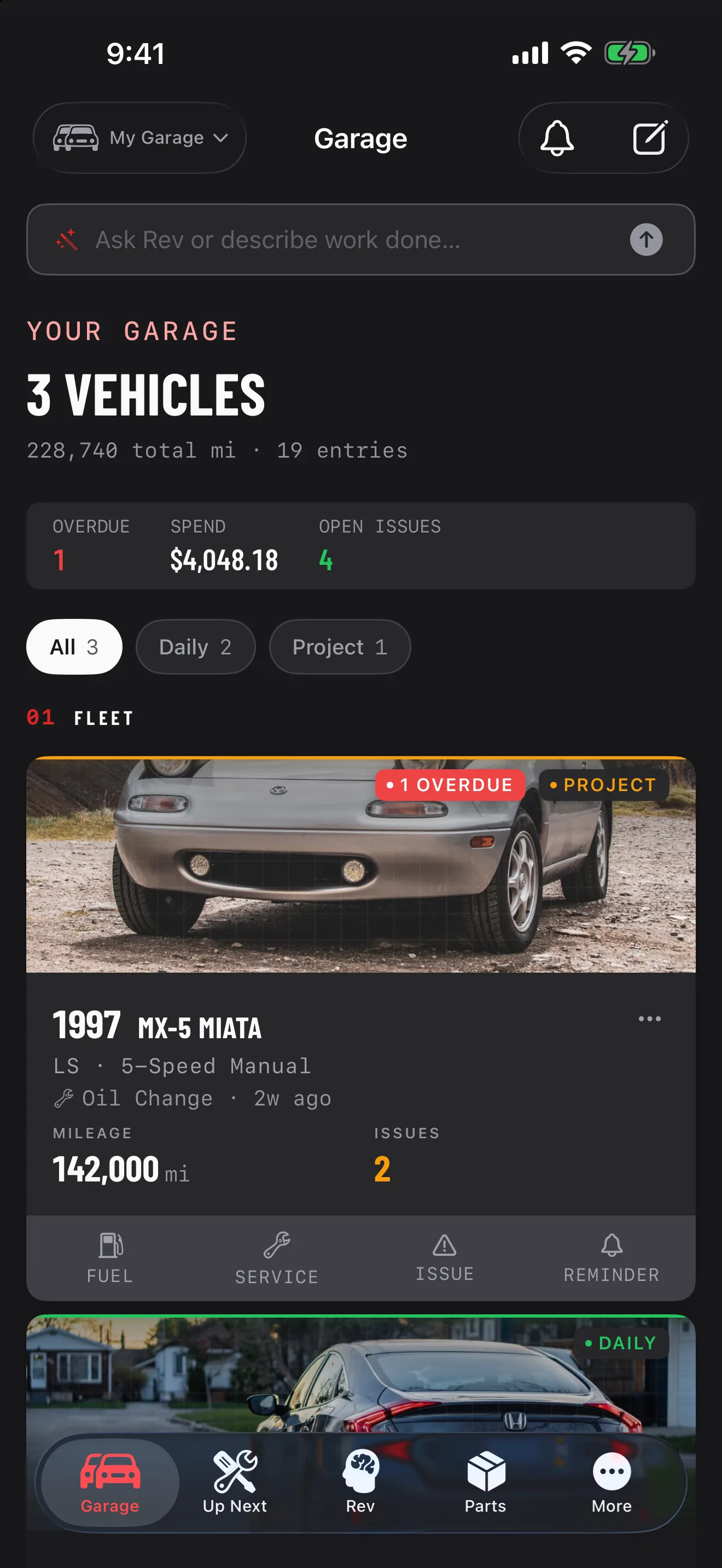
Your car's history is scattered
When did you last change the diff fluid? Which pads did you buy two years ago — and did they squeal? The answers exist, but they're spread across shop receipts, a parts-store account, three photo albums, and your own memory. Every repair starts with reconstructing what already happened.
A car with no record also sells like a car with no record. Buyers pay for documentation — and "trust me, it was maintained" isn't documentation.
One record, in order
Open any vehicle and the first thing you see is its diary — everything that ever happened to the car, merged into one chronological timeline.
- Services and repairs — every log with date, mileage, cost, parts used, and photos.
- Fixes, opened and closed — the rattle you noticed in March and the bushing that ended it in May, both on the record.
- Notes and photos — quick observations, before/after shots, and anything worth remembering later.
- Mileage updates — every reading, so the timeline knows when things happened in miles, not just dates.
- Paperwork renewals — registration, inspection, and insurance dates sit in the same record, and warn you before they expire.
Write one line. It's part of the record.
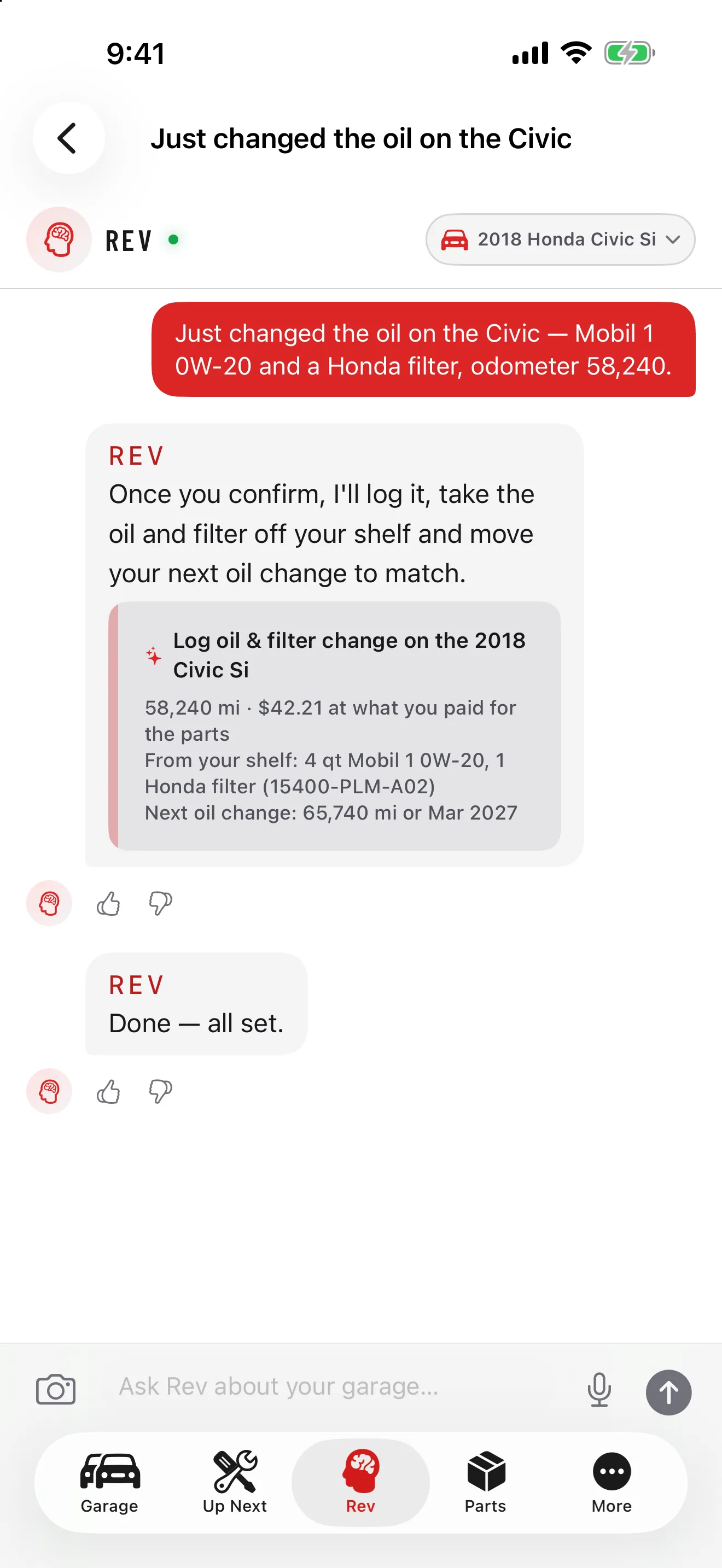
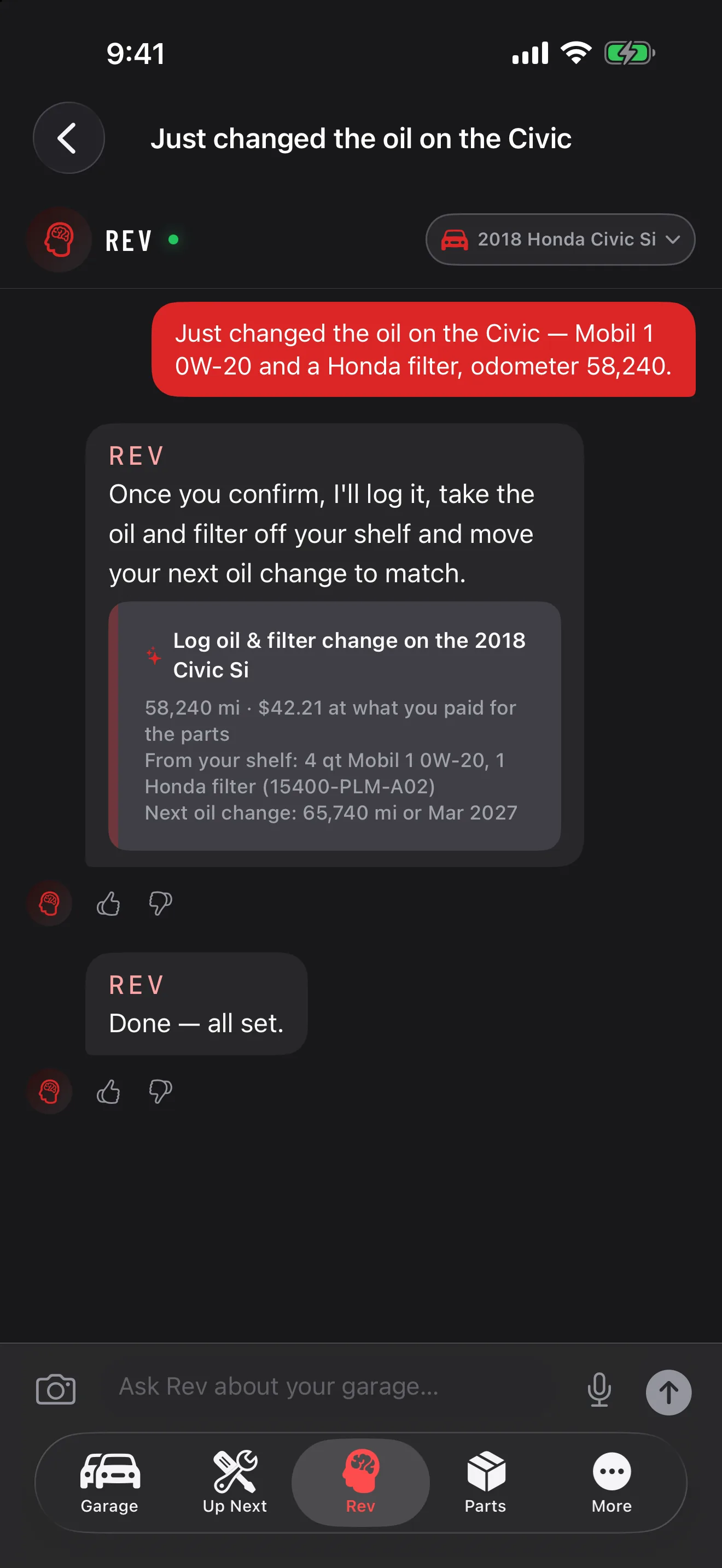
A diary only works if writing in it is easier than not writing in it. Type a line the way you'd say it — "oil change at 87,450, Mobil 1, new drain plug washer" — and it becomes a structured entry with mileage, cost, and parts filled in. Snap a receipt and GarageHub reads it into the log for you.
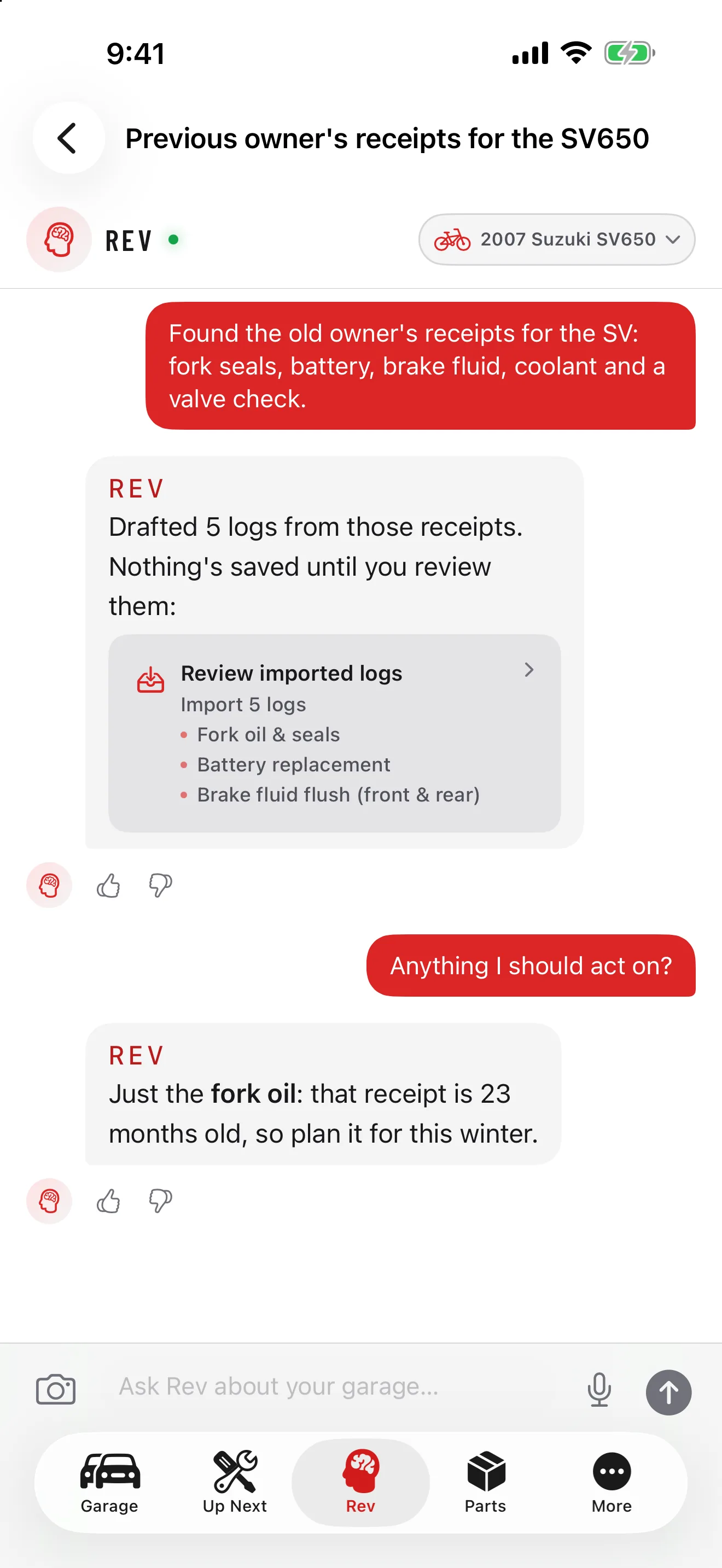
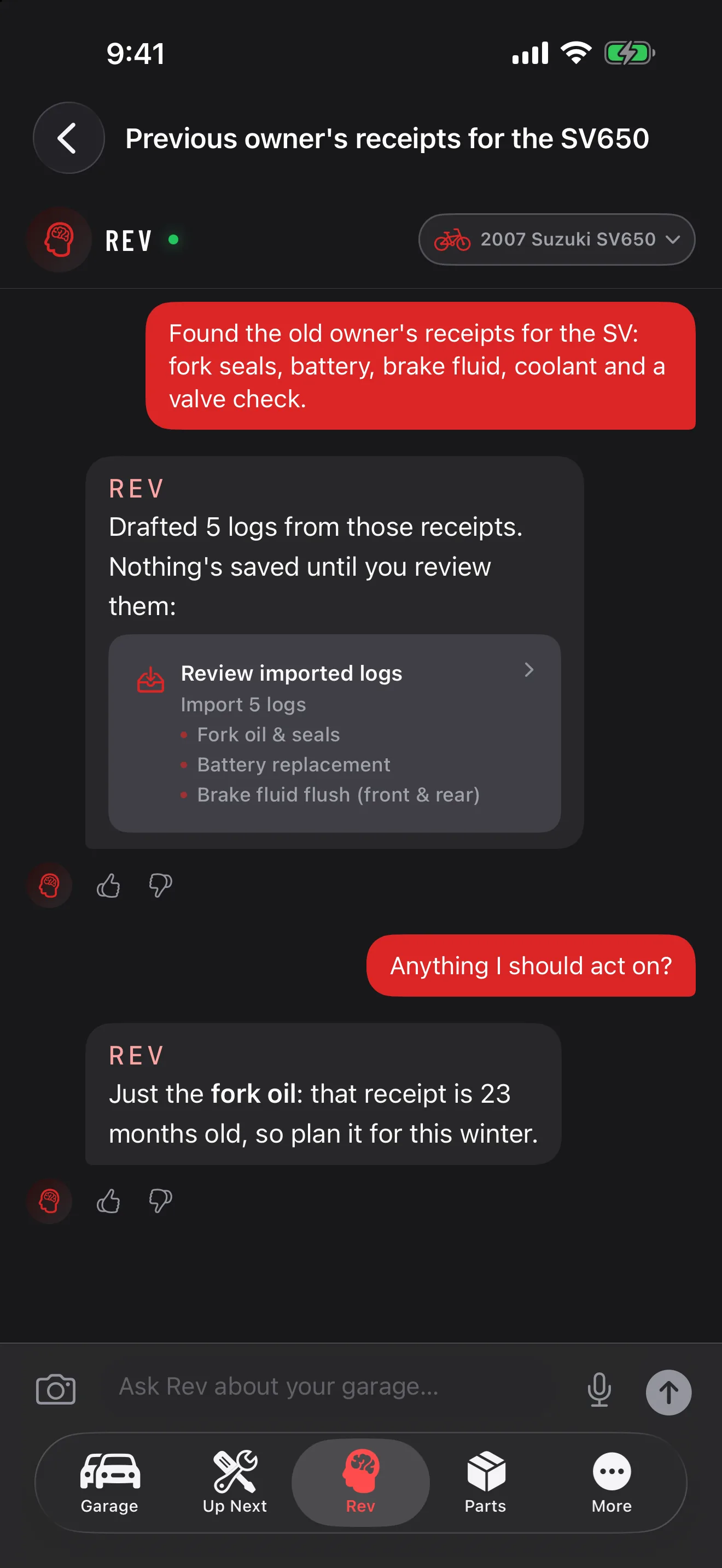
Already have years of history somewhere else? Photograph the shoebox of receipts or import a CSV from another app — your diary starts from the day you bought the car, not the day you installed GarageHub.
A diary today is a history report tomorrow
When it's time to sell, your diary becomes proof. Premium turns it into a shareable, verified history report — one link a buyer can open, with mileage history and every documented service. You control what's visible: costs, shops, photos, and VIN are yours to show or hide, and you can revoke the link any time.
A documented car is worth more than an identical undocumented one. The diary you keep for yourself is the same one that closes the sale.
Common questions
Is the car diary free?
Yes. GarageHub's free tier includes 1 vehicle, 50 service logs, 25 photos and unlimited parts, plus 15 Rev messages a month — enough to start your car's diary today. Premium ($7.99/mo or $59.99/yr) unlocks unlimited vehicles, logs, and photos.
What shows up in the timeline?
Everything that happens to the car: service logs, completed fixes, quick notes, photos, mileage updates, and paperwork renewals like registration and inspection. It's one chronological record per vehicle — no hunting across tabs.
Can I add my car's history from before GarageHub?
Yes. Snap photos of old receipts and GarageHub reads them into service logs, or import a CSV from another app or spreadsheet. Your diary can start from the day you bought the car, not the day you installed the app.
Does the diary help when I sell the car?
Yes. Premium turns your diary into a shareable, verified history report — one link a buyer can open, with mileage history and every documented service. A car with a complete record is easier to sell and holds its value better.
Start your car's diary
Add your vehicle, log the last thing you did to it, and the record starts today. Free to start — no credit card required.